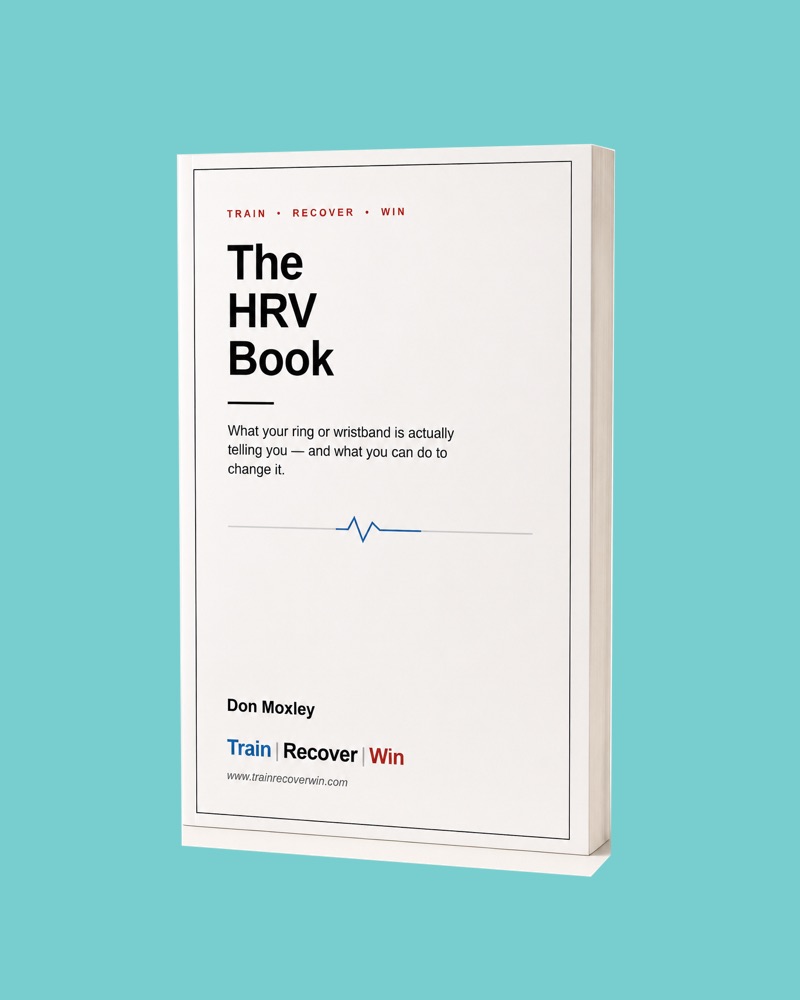
What your ring isn't telling you Get The HRV Book →
MODE METHOD

AdvertorialSponsored by Mode + Method

5 Things Your Wearable Isn't Telling You About Your HRV

Your ring hands you a number every morning. Here's how to actually read it, from a sports scientist who was tracking HRV long before it fit on a finger.

Get The HRV Book

Digital e-book · $19.99 · Delivered to your inbox

A woman in her late forties checks her fitness watch on the edge of her bed after waking.

Written by Don Moxley, Ohio State's first sports scientist

  • 30+ yrsin human performance
  • 2Olympic medals*
  • 4world championships*
  • 7national championships*

*Won by athletes he supported

One morning's score is mostly noise.

A glass of wine, a warm bedroom, a ring that slipped a little overnight. Any one of them can move your HRV more than the habit you're trying to measure, so a single reading can make you feel great or terrible about nothing at all.

What matters is direction. Three or four mornings pointing the same way is a signal. One morning is weather.

Get The HRV Book


Your baseline takes about a month to trust.

Your wearable starts scoring you on day one, but your nervous system doesn't run on the 21-day habit myth. It takes roughly four weeks of consistent wear before your personal baseline is stable enough to judge a trend against.

Until then, wear it every night, the same way, and don't read too much into any single week.

Get The HRV Book
A man and a woman in their fifties jog side by side along a waterfront path, chatting.

Comparing your number to anyone else's tells you nothing.

Two equally healthy people can have completely different baselines. Age, genetics, fitness history and even how each device calculates HRV all shift the number. Your 45 isn't worse than your partner's 70, and it isn't better than a friend's 30.

The only comparison that means anything is you against you: today against your own four-week baseline.

Get The HRV Book
A man in his fifties asleep in a calm bedroom before dawn.

Sleeping isn't the same as recovering.

You can spend eight hours in bed and still wake up under-recovered. Your sleep tracker counts the hours. HRV shows whether your nervous system actually took its foot off the gas.

Alcohol is the clearest example. A couple of evening drinks can noticeably suppress overnight HRV even when your sleep duration looks normal, and the dip can linger into the next day.

Get The HRV Book
A woman in her fifties sits by a window with her eyes closed, one hand on her chest, breathing slowly.

The most-researched lever is free.

Slow breathing at about six breaths a minute (five seconds in, five out) is one of the most studied ways to shift your nervous system toward rest and recovery, and it works in minutes.

Try one round now.Breathe in as the circle grows, out as it shrinks. Five seconds each way.

The book covers the other levers too, with the research laid out honestly: sleep, training load, heat and cold, what you eat and drink, and the people in your life.

Get The HRV Book

What you'll learn in The HRV Book

An honest book about your body. It earns your trust one careful claim at a time.

  • What your score is really calculating

    Where your wearable's algorithm adds genuine insight, and where it flattens something more complicated into a single figure.

  • Why one morning's number is mostly noise

    And how many days of data it takes before a trend is worth trusting.

  • How to build a baseline you can rely on

    And why comparing your number to anyone else's tells you almost nothing.

  • The levers that actually change the number

    Sleep, breath, training load, heat and cold, what you eat and drink, and the people in your life, each with the research laid out honestly.

  • Where the science is strong, and where it isn't

    No overselling, no miracle claims, just what the evidence supports at each turn.

The athlete

Learning when to push and when to protect tomorrow.

The parent

Keeping enough in reserve to be present after a hard day.

The grandparent

Making the most of a third third of life with far more room for growth than anyone warned them.

Three people, one number, and one practice that serves all of them.

Stop checking the number. Start using it.

The HRV Book by Don Moxley. A digital e-book, sent to your inbox right after purchase.

Get The HRV Book

$19.99 · Instant digital download

Cover of The HRV Book by Don Moxley.
Get The HRV Book